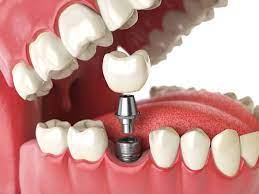
Recent Developments in Dental Implants
Dental implants have been around for over a hundred years, but it was not until the mid-60’s that there was a major revolution in the science associated with dental implants. At that time “Osseo-integration” was introduced to the dental profession. This concept greatly improved dentists’ understanding of how implants are integrated into the surrounding bone. This knowledge has greatly increased the success rate of implant placement and implant survival. Today dental implant 5-year survival rates are commonly estimated to be in the range of 90%.
If you are looking for dental implants treatment in vivekanand nagar, then Welldent Dental clinic is the right choice for you for the best treatment.
Initially, it was felt that the implants needed to be as long as the roots of the teeth that they replaced. This presented a problem in many cases where patients had missing teeth. The problem was caused by insufficient bone for placement of the implants. The reason for the lack of bone related to the phenomena that when teeth are extracted, the bone that originally held the teeth in place shrinks. The reasons for the shrinkage, is that there is a less of a need for the bone now that the tooth is gone and such shrinkage is part of the healing process.
This problem was addressed primarily with placement of bone grafts into areas that lacked sufficient bone to retain implants. Although bio-technology provided various forms of bone graft materials and membranes to hold the bone graft in place in order to allow for the body to incorporate the graft material, the final result was not always predictable and added substantially to the cost of dental implants.
Today it is recommended that when teeth are extracted, that graft material be placed immediately into the extraction site. This often dramatically reduces the shrinkage of any bone during the healing process. The socket incorporates the bone graft material and seems to heal with minimal loss of the original bone that had supported the tooth. This is especially important in the upper anterior arch where esthetics is very apparent. Placing a graft at the time of extraction is beneficial even where the area is to be restored with a bridge rather than an implant. It allows for a more cosmetic and functional end-result, in contrast to allowing the bone in the socket to shrink.
In recent years, some implant manufacturers began producing much shorter implants, some as much as 6mm shorter from the traditional 11 mm length. In some cases these have also been narrower than the traditional type implants that had been placed for many years. Such shorter and narrower implants, called “mini-implants”, have mostly been employed in cases where the implants are needed to help support a complete denture which then fits over the implants. Such implant-denture cases are commonly known as implant supported dentures, and are especially of benefit in the lower arch where stabilization of full dentures is often problematic.
In addition to the shorter and narrower implants, manufactures have in the past decade also come out with shorter but wider implants. These have been used to restore individual missing teeth. The rationale behind such a design is that the surface area of the implant is of equal significance to the success of the implant, as is the length of the implant. Research has generally substantiated this assumption and such shorter and wider implants have been successfully placed primarily in patients where the bone has resorbed vertically thereby not providing the vertical height needed for the traditional longer implants. In fact, some believe that it is better to place a shorter implant even where there is adequate bone for placement of a longer implant. These dentists feel that biomechanical forces allow for bone around shorter implants to function better than the bone around longer implants. These shorter and wider implants have greatly benefited patients in that they have resulted in a reduced need for bone graft procedures as well as sinus lifts, thereby also reducing implant costs.
The surfaces covering the implants have also changed over the years in an attempt to improve the oseo-integration and in turn the success rates have improved even further. The various changes made in dental implants over the years have made the placement of dental implants more predictable, with practically no pain and reduced costs. The dental patient is the ultimate beneficiary of all these developments.
Article Source: EzineArticles
 Welldent Family Dental Care and Microdentistry Centre