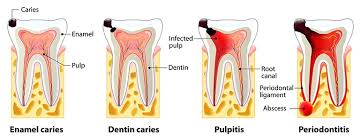
Most root canal procedures accomplish their task of saving the diseased tooth, at least initially. Unfortunately, in some cases subsequent events can adversely affect the long-term health of a tooth that has had root canal treatment. Although the root canal procedure may have been initially successful in eliminating the cause of the tooth’s diseased condition, sometimes the affected tooth is re-contaminated by bacteria seeping back into the interior of the tooth through a process called coronal leakage. The contaminants migrate from the patient’s mouth past a treated tooth’s dental restoration (a crown or filling) and on into the treated root canal space. The re-infection that often results from this type of bacterial recontamination almost inevitably causes the root canal treatment to fail.
If you want information about orthodontic treatment contact with our dentist we provide root canal treatment, if you need help in finding an orthodontist in your city, visit our site.
The recontamination process described above is called “coronal” leakage because the seepage of bacteria-laden saliva takes its path into the tooth’s interior from the “crown” portion of the tooth (the part of the tooth that’s visible above the gum line), rather than from the root portion of the tooth (the part of the tooth encased in the jawbone). Coronal leakage provides a constant, ongoing supply of bacteria and nutrients that cause and facilitate reinfection of the treated tooth, and may actually be the most common cause of root canal treatment failure. Research indicates a reinfection of the root canal due to coronal leakage can occur quickly (often within just a few days) if the materials used to fill the canal during the initial procedure are not properly isolated from oral contaminants by a well-sealed dental restoration.
Every root canal procedure involves the placement of a temporary or provisional dental restoration (such as a temporary filling or crown) to create a seal protecting the materials now filling the empty, disinfected root canal space from oral contaminants. Although the temporary installation will be replaced by a permanent dental restoration in the near future, the speed with which re-infection can occur requires the temporary installation to create and maintain an adequate seal. Naturally, your dentist or endodontist must select and use a dental restoration that is capable of creating such a seal.
The same possibility for coronal leakage exists after the installation of a permanent dental restoration (the permanent crown or filling) unless your dental practitioner uses appropriate materials and techniques. In this case, however, the materials and type of permanent restoration must not only create an effective seal to act as a barrier against potential coronal leakage and recontamination, but because of its permanent nature, the restoration must also be extremely durable. Your teeth are subjected to difficult conditions routinely, and by its nature a root canal procedure weakens the affected tooth. The permanent coronal seal must be capable of resisting the effects of salivary acids and potential tooth breakage for many years into the future.
Your dentist or endodontist will evaluate your particular situation before recommending the dental restorative material that would be appropriate to create an adequate coronal seal. He or she might suggest dental bonding (a white filling) for a front tooth, but a molar must withstand heavy chewing forces and might require a sturdier dental crown, especially if the tooth already had a filling before the root canal procedure was performed. Have a frank discussion about your options with your dental practitioner, and make sure you thoroughly understand the recommended restorative solution before he or she proceeds with the permanent installation. Again, the two most important factors to consider are the proposed restoration’s ability to create an adequate seal against coronal leakage and its ability to withstand extreme conditions and high stresses. Research confirms that a durable, sound coronal seal is of utmost importance to the long-term success of any root canal procedure, so make sure you and your practitioner choose your temporary and permanent dental restorations accordingly.
Once you and your dentist or endodontist agree on the right permanent dental restoration, try not to unduly delay its installation. Although financial considerations may influence the timing of the permanent restoration, the sooner an effective permanent deterrent to coronal leakage is in place, the higher the likelihood of long-term success for your root canal treatment.
Article Source: EzineArticles
 Welldent Family Dental Care and Microdentistry Centre