How oral piercings impact oral health

Many people choose to get an oral piercing as a form of self-expression, but are they aware of the potential risks to their oral health? Here’s what to know before getting that piercing.

Many people choose to get an oral piercing as a form of self-expression, and sometimes even as a badge of courage for facing fear and pain. Tongue piercings have seen an uptick in popularity in recent years. But few people think to stop and consult their dentist or health professional before getting pierced.

To learn more about their options for an orthodontist, contact with our best dentist in vivekanand nagar.

Tongue piercings can have a measurable impact on dental health. Here are some of the health risks and potential complications to learn before getting an oral piercing.

Types of oral piercings

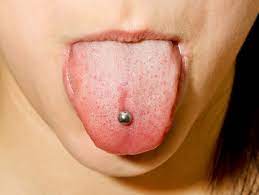
The most common oral piercing is the midline tongue piercing. The tongue can also be pierced twice, in symmetrical vertical lines, known as “venom Bites.” The tip of the tongue can even be pierced horizontally using a curved barbell. Both the upper and lower frenulum are popular locations, as is a “labret” piercing, which is done under the bottom lip. The philtrum and various places on the lips can be pierced to mimic different types of animal bites, such as the “spider bite” and “snake bite.”

Each of these locations offers a slightly different set of oral health risks, as well as potential complications from the piercing process. These can include:

  • Infection
  • Abscess
  • Swelling
  • Hypersalivation and drooling
  • Nerve damage
  • Allergic reaction
  • Difficulty speaking or swallowing
  • Airway obstruction
  • Excess bleeding
  • A bifid or cleft tongue

Once the initial wound has healed, people with oral piercings still face multiple long-term health risks. These can include:

Tooth damage

Playing with the mouth jewelry, clicking it back and forth across the teeth, or accidentally biting down on it while chewing can cause cracked or chipped teeth and exposed nerves. Fillings are at risk of being damaged, as well. Biting down hard enough on the fixture can even break a tooth completely. Having a hard metal object constantly scraping up against the enamel can cause it to wear or break, resulting in caries forming and further tooth decay.

Gum regression

If a piercing is placed too close to the gums, the constant irritation can cause gum regression. Studies have found that 44% of people with oral piercings experience gum regression, while only 7% of people without oral piercings are likely to suffer from it. In some cases, a gum graft may need to be performed in order to save the tooth. If left untreated the regression can become so severe that the tooth may fall out.

Gum disease

Along with generalized gingivitis, those with oral piercings have a higher chance of developing gum disease. The mouth is the gateway for most pathogenic bacteria that cause damage to our health. Chronic inflammation is the cornerstone of many different and severe autoimmune diseases. A condition as simple as gingivitis can have major implications further down the road if left untreated. Stopping gum disease is not just for oral health, but for overall health and longevity.

Diastemata

Diastema can form when there is constant pressure on the teeth from the piercing or by constantly playing with the jewelry in the same way. This results in a gradual shifting of the natural position of the tooth. The most common diastema that occurs is a midline gap between the two front top or bottom incisors, which requires expensive and lengthy orthodontic treatment to correct.

Endocarditis

People who have moderate- to high-risk cardiac conditions can be in serious peril from their oral piercings. The holes that piercings make provide an express portal for bacteria to enter the bloodstream and travel directly to the heart. Bacteria can settle on the heart valves and cause inflammation of the heart. This inflammation can lead to major illness and possibly permanent heart damage. There is also a considerable risk of local and systemic infections that can expose the body to pathogens such as hepatitis B and C, the herpes simplex viruses, and even HIV.

Tips to avoid oral health issues

Those with oral piercings who are fully aware of the health risks but still wish to keep their piercings can take several steps to possibly avoid some of the negative effects.

  • Keep the piercing site as clean as possible. Rinse the mouth after every meal to remove any leftover debris and gargle twice daily with an antimicrobial rinse.
  • Try to avoid playing with or clicking the jewelry and choose lightweight or polymer jewelry to minimize damage to the teeth.
  • Periodically check the tightness of the fixtures so there is less risk of breaking or swallowing the pieces.
  • If playing sports, remove the jewelry or wear protective mouth guards.
  • Practice good oral hygiene, brushing and flossing twice daily.
  • Keep regular appointments for teeth cleanings and checkups.
  • Inform a doctor or dentist at the first signs of redness, swelling, or infection.
  • Using clean hands, occasionally remove the piercing to give the gums and mouth cavity a rest from irritation.

A note to dental professionals: Educating your patients on the potential health risks involved with piercings may help stem those risks. Dental professionals can help by making their patients and communities aware of these dangers.

source: dentistryiq

Understanding Gum (Periodontal) Disease

The mouth is a remarkable eco-system, studied closely by researchers for hundreds of years: your own oral tissues live alongside millions of bacterial organisms, most of the time in benign cooperation. Sometimes, however, that symbiosis erupts into an all-out war known as periodontal disease.

If you looking for best dental clinic in nagpur then,Visit our Dental Clinic in Vivekanand Nagar to get more information about dental health.

Periodontal disease refers to any disease (actually several) that affect the areas around the teeth (from the Latin “peri” – around and Greek “odont” – tooth). Periodontology is the corresponding specialty that studies these supporting structures of the teeth — including the gingival (gum) tissues, the periodontal ligament which suspends the tooth in its socket and the underlying bone to which it is attached. Periodontics is the dental specialty dedicated to the treatment and prevention of periodontal disease.

The periodontal tissues are arguably among the most highly researched tissues in the body. Contributions by researchers from many fields have greatly added to our knowledge of oral as well as general health and bodily functions. While periodontal diseases may be confined to the mouth, their effect may not be: research is beginning to uncover a relationship between periodontal health and general health. Known risk factors for periodontal disease include smoking and diabetes. Evidence is also suggesting a relationship between severe periodontal disease, cardiovascular disease (heart and stroke conditions) and mothers of preterm low birth weight babies.

Periodontists have developed several effective treatments to halt or eradicate many forms of periodontal disease. The most effective treatment, though, is preventive, performed by the patient. Good personal daily oral hygiene, which disrupts the growth of plaque, is the best defense against most forms of periodontal disease.

There are currently over six hundred species of bacteria known to exist in the mouth alone, with only about four hundred currently identified.

Dental Plaque: The Main Culprit in Periodontal Disease

17th century and inventor of the first microscopes, was the first to observe living bacteria, which he called “animalcules.” He observed dental plaque to be bacterial in origin and made the connection between it, oral hygiene and gum disease.

Over the next four centuries, knowledge about the relationship between the bacteria-rich plaque and periodontal disease advanced steadily. Studies carried out in the 1950s and 1960s, contributed enormously to this understanding: by looking at large populations of different age groups over time, researchers found a clear but indirect association between mouth cleanliness, dental (bacterial) plaque deposits on teeth and the time that it was present. Most of the variation in disease levels could be accounted for by bacterial plaque alone, the rest attributed to other factors like diet, nutrition, bite factors and other variables. The association between smoking and periodontal disease also became apparent with smokers showing worse and more rapid bone loss than non-smokers.

source: deardoctor

Tooth Implant Procedure – Most Practical Replacement Option For a Single Tooth Or a Few Teeth

Knocked out a tooth or a few teeth due to sports or an accident? The best answer to your woes could be tooth implant procedure especially if you would like to avoid the scenario where your other teeth are affected by the positioning of bridges and partial dentures. To acquaint you with the procedure of tooth implant, the basic steps are described to familiarize yourself with the procedure and to better equip you to ask questions, and confer other alternatives with your doctor.

If you are looking for dental implants treatment in vivekanand nagar, then Welldent Dental clinic is the right choice for you for the best treatment.

Basic Description of a Tooth Implant Procedure

* The first stage of a tooth implant procedure is to determine whether you are a good candidate for a dental implant. Smoker, heavy drinkers, and people with healing disabilities such as diabetes and anaemia are discouraged to undergo this treatment to avoid the risk of complications. The second stage is compliance with pre surgery requirements to include administration of x-rays for jawbone analysis as basis for determining the most appropriate implant device.

* The third stage involves the surgical procedure. Your dentist will decide on the type of anaesthesia to be administered whether it is a local anaesthesia or a general type to put you to sleep for the duration of the surgery. Also depending on your medical examination, antibiotics may be given before the surgery.

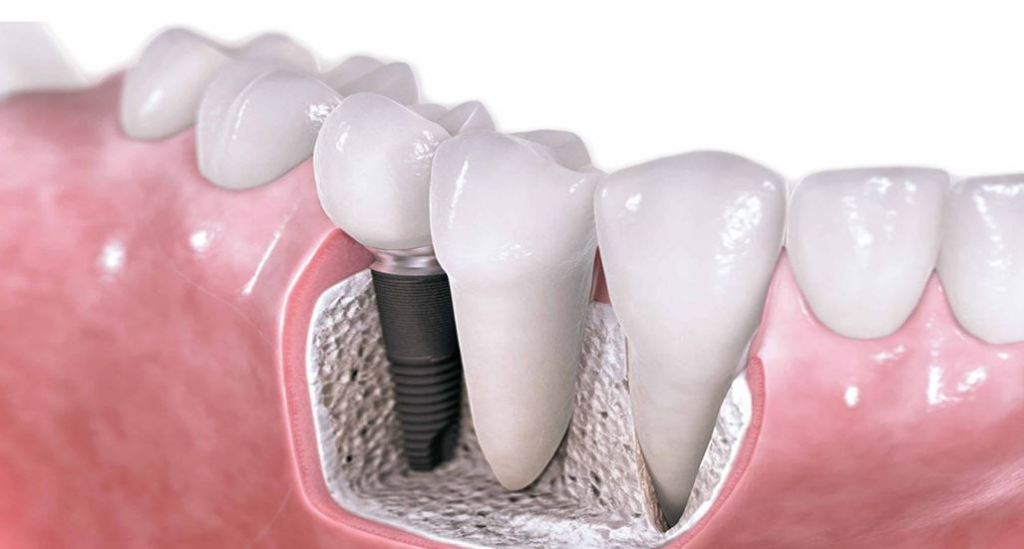
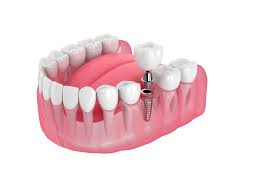
* The procedure involves incision on your gums and formation of a space by drilling a tiny hole in your jawbone. Through surgical procedure, a titanium-alloy cylinder is inserted into your jawbone which serves as an artificial root for holding a false tooth. Your gums are then sutured to enable the implants to get healed, and fuse with your jawbone to provide a stable support for the artificial tooth. The healing period can last for a minimum of four months or a maximum of six months.

* Your dentist will require you to take in antibiotics and pain relievers after the surgical procedure. You will also be given a temporary bridge or denture, if the implant is placed in the front of your mouth to alleviate any social discomfort. And after ten days, you will be instructed to return to your doctor to have the stitches removed.

After the implant is placed in your jaw, you will have to wait several months for the implant to osseointegrate or be attached to your jawbone. Healing usually requires three or four months in the lower jaw, and five to six months in the upper jaw. At this time, the head of the implant remains hidden below your gum.

* After the implants have osseointegrated to the surrounding jaw bone, you will be prepared for the second surgery. After the administration of anesthesia, your surgeon will uncover the implant by making a tiny incision in your gum. The protective screw of the implant will be replaced by a collar or metal abutment to maintain the space for your gums for proper healing purposes around the implant. The metal abutment is a small titanium cylinder that is positioned above your gums, where your teeth would be placed.

* Note that some dentists opt for one-stage implants. These dental implants placed in the jaw, remain exposed in the mouth so that administration of second surgery is no longer necessary.

* Normally, after two or three weeks after the second surgery, you have to visit your dentist to start the restoration process or having your crown or bridge made. To replace a single tooth, your dentist will use a crown. The crown will be custom designed to blend seamlessly with your other teeth. To replace back teeth, the use of metal crowns is often the answer considering that the same teeth are exposed to greater pressure from biting and chewing. To replace front teeth, the option is ceramic and porcelain crown type because of its natural appearance. Meanwhile for multiple teeth replacement, the implant-supported bridge is used.

Tell me the Cost of Dental Implant

* Cost of dental implant may range from $1,000 to $4,000 per tooth. On average, a full upper or lower jaw restoration would costs around $12,000 to $36,000, while full mouth restoration may range from $24,000 to $72,000.

* The price differences on cost of dental implant are due to the implant devices used, type of dental implant done, training and experience of the dentists, area and country location, and the amount of additional work done before the dental implants can be placed such as sinus augmentation for upper jaw implants and bone grafting when there is not enough bones to strongly hold the implant.

* Thus a dental implant is cheaper if the scope of work is limited to a single tooth or a few number of teeth. But if you need full lower or upper jaw teeth restoration done; you may wish to avail of dental financing plans or discuss with your dentist whether they accept installment payments.

Dental Implant Categories

* Endosteal implants or Root-Form Titanium Implants are implants directly placed into the jaw bone. These can be screw dental implant types or plate form implants, where a long, flat, implant is placed into the jawbone. Once the gum tissue surrounding the implant has healed, a second surgery is a must to bond a post to the original implant where the artificial tooth or teeth will be attached individually, or grouped together in a bridge or denture.

* On the other hand, subperiosteal implants are used when the amount of bone is not sufficient to strongly support endosteal implants. Instead of being inserted into the jaw bone, the subperiosteal dental implant types rest on surface of the jawbone beneath the gums and become fixed when the gums heal. Attached to the frame, are posts that extend beyond the gums wherein the substitute teeth will be placed. This type of implant is made from a CAT scan and cosmetic impression of the jawbone.

Success Rates and Durability of Implants

* Five-year studies have revealed a 95% success rate for lower jaw dental implants and 90% success rate for upper jaw dental implants. Upper jaw implants are more complicated operations because the upper jaw is less dense than the lower jaw, making osseointegration or the integration of the implant with the bone more difficult to attain.

* Implants normally last for ten or twenty years when done correctly and when patients adhere to a strict dental regimen.

The option to undergo tooth implant is a wise decision if you are confronted with a missing tooth or you need to replace a few teeth. Always ask your dentist for payment options when undergoing a dental implant procedure.

Article Source: http://EzineArticles.com/1574169

Dental Implants and Implant Dentistry

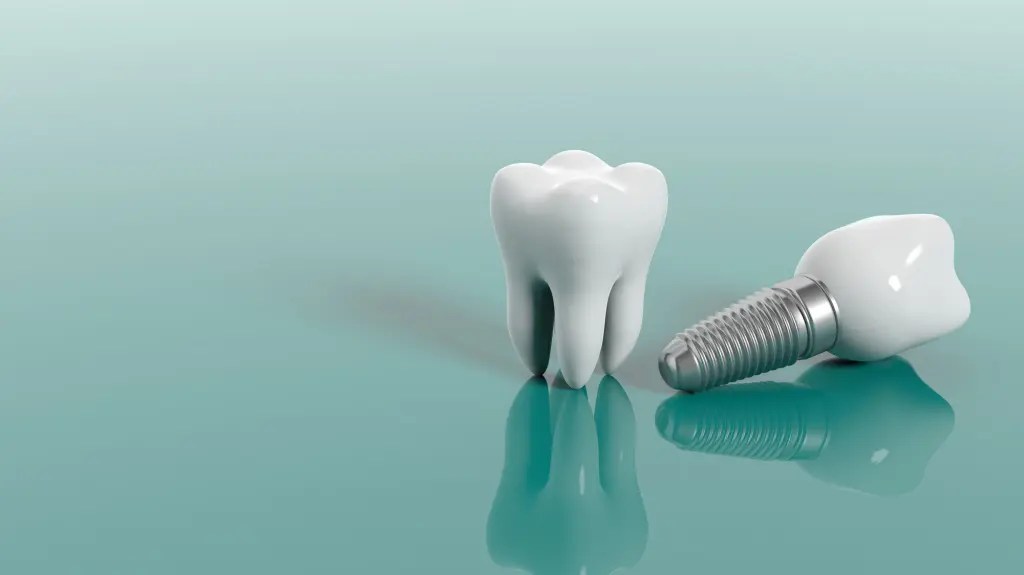
Implant Dentistry is a field of Dentistry that refers to dental treatments offering teeth replacement using Dental Implants. Implant Dentistry and the concepts related to it have been successfully developed since the 1960’s. The finding that titanium, the material most commonly used for Dental Implants, can have bone growing around it was a significant discovery for Implant Dentistry. Up until that time only the top part (the dental crowns) of missing teeth could be replaced. This is because there was no way available to replace the roots of the teeth. Dental Implants (also known as Teeth Implants) now can replace both the crowns and the roots of missing teeth, and since that first discovery the field of Implant Dentistry has grown considerably.

If you are looking for dental implants treatment in vivekanand nagar, then Welldent Dental clinic is the right choice for you for the best treatment.

Much research is being conducted in the field of Teeth Implants. In fact, since the realisation of the potential of dental implants, research has greatly developed to try and optimise this form of dental treatment. As previously mentioned Titanium is the material of choice used in Implant Dentistry. It is a very biocompatible material, meaning that it interacts well with the gum and bone tissues and is well tolerated by them. For Implants mostly commercially pure, grade IV (medical grade) titanium is used.

There are now a number of large companies involved in Implant Dentistry, each with its own particular systems and components. There are a number of different components to Teeth Implants and these are discussed more at our Dental Implants website. Taking the time to familiarise yourself with the concept of Dental Implants is important if you are considering this form of treatment for yourself. Some of the most well known Implant Dentistry systems are Straumann, Astra Tech, Nobel, 3i and Zimmer. The different Implant Dentistry systems will differ in the shape, size, dimension and finish of titanium surfaces. There are a number of factors that need to be considered by your Implant Dentist when choosing a Teeth Implant system. In addition to all the clinical criteria, it is also important to know that your Teeth Implant system has a significant research background to it that shows support for its long-term success.

So you can see that Teeth Implant treatment involves many factors, which also includes the collaboration of Dentists, Gum Specialists (Periodontists), Dental Technicians and sometimes Oral Surgeons. It is therefore also important to have someone who can coordinate these many factors involved in Implant Dentistry so that Dental Implants treatment provides successful and satisfying long-term results.

Article Source: EzineArticles

Treating Stained Teeth With a Teeth Whitening Pen

It can be an uncomfortable experience to realize that you have stained teeth. When that day comes, you might think back at how often you have flashed your smile and someone else has noticed yellow teeth sticking out. Stained teeth are a problem for all segments of the population, and the industry to treat the situation has boomed in recent years. Your teeth can become yellow for a variety of reasons. Some people just have naturally yellow or teeth due to thinner enamel layers. For these people, not much can be done and they have to be extra careful that they don’t damage their top layer. But the good news is that this situation only applies to a small segment of the population. For most other people who have yellow teeth, a good teeth whitening product will be able to deal with the stains in an effective manner.

If you looking for dental treatment contact with our dentist in vivekanand nagar, we provide best services in nagpur.

Most oral hygiene products these days come with some sort of whitening agent in them. All of them from toothpastes to mouthwashes can be welcome additions to any daily oral hygiene routine. But don’t expect something as simple as a toothpaste to get rid of the problem by itself. You should make sure to keep up with daily brushing and flossing, but you might need something a bit more powerful to help with your stained teeth.

Teeth whitening strips are a very popular way to apply a bleaching agent to the entire mouth. They have to be applied evenly and left in place for certain amount of time. In general, whitening strips are indeed effective for the purposes of treating yellow teeth, but they require a certain degree of patience as well as proportionately even teeth. Another option comes in the form of a teeth whitening pen, which you use yourself to specifically target problem areas. A whitening pen contains a similar bleaching agent to most other whitening products. The advantage to something like this is that you can dab it yourself whenever you like on the areas you feel are most affected.

Once you see the effects of whitening products (which usually happen after a few weeks), you should do your best to stay away from the things that lead you to the problem in the first place. So that means avoiding foods that cause staining, and certainly avoid smoking if possible. The effects of teeth whitening products are certainly not permanent, and good oral hygiene will always be an essential part of your life.

Article Source:

It can be an uncomfortable experience to realize that you have stained teeth. When that day comes, you might think back at how often you have flashed your smile and someone else has noticed yellow teeth sticking out. Stained teeth are a problem for all segments of the population, and the industry to treat the situation has boomed in recent years. Your teeth can become yellow for a variety of reasons. Some people just have naturally yellow or teeth due to thinner enamel layers. For these people, not much can be done and they have to be extra careful that they don’t damage their top layer. But the good news is that this situation only applies to a small segment of the population. For most other people who have yellow teeth, a good teeth whitening product will be able to deal with the stains in an effective manner.

Most oral hygiene products these days come with some sort of whitening agent in them. All of them from toothpastes to mouthwashes can be welcome additions to any daily oral hygiene routine. But don’t expect something as simple as a toothpaste to get rid of the problem by itself. You should make sure to keep up with daily brushing and flossing, but you might need something a bit more powerful to help with your stained teeth.

Teeth whitening strips are a very popular way to apply a bleaching agent to the entire mouth. They have to be applied evenly and left in place for certain amount of time. In general, whitening strips are indeed effective for the purposes of treating yellow teeth, but they require a certain degree of patience as well as proportionately even teeth. Another option comes in the form of a teeth whitening pen, which you use yourself to specifically target problem areas. A whitening pen contains a similar bleaching agent to most other whitening products. The advantage to something like this is that you can dab it yourself whenever you like on the areas you feel are most affected.

Once you see the effects of whitening products (which usually happen after a few weeks), you should do your best to stay away from the things that lead you to the problem in the first place. So that means avoiding foods that cause staining, and certainly avoid smoking if possible. The effects of teeth whitening products are certainly not permanent, and good oral hygiene will always be an essential part of your life.

Article Source : EzineArticles

How Sensitive Are Your Gums?

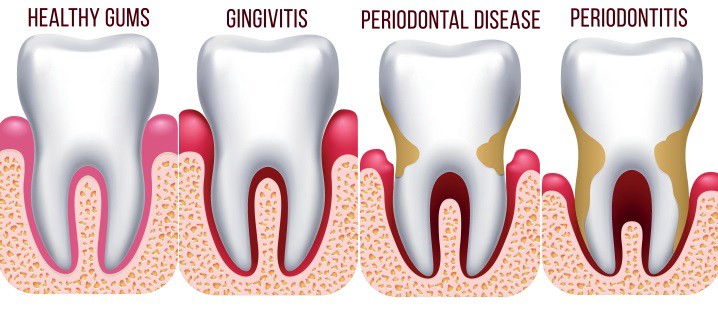
Periodontal diseases develop when inflammation and infection that destroys tissue supporting the teeth, including gums, periodontal ligaments and alveolar bone.

To learn more about their options for an orthodontist, contact with our best dentist in vivekanand nagar.

Gingivitis can be prevented and treated. Factors such as medication and a low immune system are likely to the development of this disease, the most common cause is poor oral hygiene. Rinsing with mouthwash or floss and clean with a professional cleaning, by a physician specialist, can significantly reduce the risk of developing the disease. If you already have gingivitis, a teeth cleaning done by a doctor can fix it.

Signs and symptoms – Because gum disease are early, in most cases, painless, you can have gingivitis and not even know. Often, it is possible to notice these signs:

* Swollen and red gums;

* Gums that bleed easily, even if not painful. You observe primarily as toothbrush bristles are pink – a sign that your gums are bleeding.

* A change in color from pink gums to dark red;

* Touch-sensitive gums.

Causes – Gingivitis starts with a bacteria plaque. This film is invisible, biofilm, usually composed of bacteria deposited on the teeth and sugars from food interact with bacteria normally found in our mouth.

Brushing your teeth removes the plaque, but it is submitted again in less than 24 hours. Microbial plaque remains on your teeth more than two or three days hardens, turning into tartar, one white substance that makes plaque more difficult to be removed and that is a true reservoir for bacteria.

The worst is that already formed s tartar may be hard to clean by brushing and with dental floss. Most likely have to present yourself to a dentist to remove tartar. As the tartar or plaque on tooth surfaces stay more, then irritate the upper gums. Over time, your gums will swell and bleed easily.

Article Source: EzineArticles

Techniques for Tooth Pain Relief

Seeing any of your loved ones especially your kids suffer from tooth pain can be very agonizing for parents. We would do anything just to relieve them from the suffering they are going through. If we could only take away the pain of suffer it for them we would gladly do. You can’t just stand and watch them go through it; you should exhaust all techniques for pain relief no matter what it takes.

If you looking for dental treatment contact with our dentist in vivekanand nagar, we provide best services in nagpur.

There are several home remedies that can help alleviate if not totally eliminate tooth pain. Onions are good bactericidal which means it kills bacteria, thus placing a piece or slice of this vegetable directly on top of the aching tooth can lessen the degree of pain. Garlic’s are also effective in relieving the pain because of its antiseptic use. You can place one clove of crushed garlic on the affected tooth. Gargling with lukewarm water with salt can draw out any bacteria thus decreasing the inflammation of your affected tooth.

Although these methods work, it is still best to prevent tooth ache from occurring and you can do this by teaching your kids proper oral hygiene. Teach them to brush their teeth thoroughly after each meal and to floss even ones a day. Don’t give them foods with too much sugar content in it. It also helps if you give them daily dose of vitamin C as this prevents cavities and bleeding of gums. Vegetables such as onions and garlic also prevents cavities, thus chewing one clove of garlic and one slice of onion will prevent tooth aches.

This broken tooth pain relief techniques can temporarily alleviate your child’s suffering but it is still best to bring your child to a dentist when you have time because sometimes the tooth ache may be caused by an underlying problem. To permanently eliminate the problem the underlying cause must be dealt with properly.

Article Source: EzineArticle

Mouth Yeast Infection Symptoms and Remedies

Mouth yeast infection or thrush is a condition wherein the oral cavities are infected by the overgrowth of a fungus known as Candida Albicans. When the body’s immune system is weak and there is nutritional imbalance, mouth thrush results to inflammation, blistering, and soreness of the mouth area. This condition can strike anytime so it is advisable to know its early symptoms.

To learn more about their options for an orthodontist, contact with our best dentist in vivekanand nagar.

An early sign of the condition is the appearance of white or yellow sores which are bumpy inside the mouth. If there is pain and bleeding on the oral cavity, there is a big possibility that you are suffering from oral yeast infection. Also, difficulty of swallowing foods and beverages can be experienced by a person suffering from thrush. In worse cases, fever can occur especially if the condition is not treated.

Treatments of thrush can both be found at home and pharmacy. If consulted to a doctor, usually the remedies being subscribed are anti-fungal medications. A lot of these treatments for thrush come in liquid, cream, or tablet form. The doctor will prescribe that the medicines be taken for about two weeks. These thrush remedies should be accompanied with proper diet such as taking pro-biotic or lacto bacillus acidophilus.

Ketoconazole is another treatment of thrush which contains anti-fungal properties such as Mycelex, Monistat and Nizoral. Ketoconzole is a form of cream which can be applied on the affected area. Also, Diflucan and Sporanox can be used as treatment of thrush. While this yeast infection remedy is expensive, it can only be applied once every day. Moreover, mouth yeast infection can be treated using herbal remedies like, capricin tea, grape seed oil, garlic, and grapefruit seed. These natural treatments are also available on pharmacies nowadays.

When afflicted with thrush, you must be careful with your health and immune system. Eat a lot of healthy foods and be conscious of your diet to avoid fermented, sweet, and carbohydrates rich foods. Lastly, mouth yeast infection can be properly and easily treated if you maintain good oral hygiene.

Article Source: EzineArticles

Root Canal Treatment: Facts and Myths

A trip to the dentist’s office is not always something you look forward to. Many people have been diagnosed with extreme anxiety on the onset of such a visit. Whether the problem is psychological or not, you need to gather courage to avoid future heartache courtesy of dental and oral health decline.Anxiety happens to the best of us and a recent root canal treatment led me to ask several questions about the procedure, general practices, implications, facts and myths.

If you looking for dental treatment contact with our dentist in vivekanand nagar, we provide best services in nagpur.

What is root canal treatment?

Pulp found in root canals can be infected as a result of severe tooth decay. Pulp is basically what keeps the tooth alive because it is constituted by nerves as well as blood vessels. When infection is evident the recommended treatment will be endodontics commonly known asRoot Canal Treatment. It is the removal of the pulp and replacement of a substance that will ward away future re-infections. Because of cutting edge technology in dental equipment and practices, the procedure will not leave teeth darkened unlike in the past.

The procedure will therefore see the tooth preserved for cosmetic reasons. The alternative is to have the tooth extracted but this should only be considered when no other option is forthcoming.

Benefits of the procedure will include not having the tooth removed as well as prevention of further infection and problems with the tooth.

However, after all is done, a dentist will recommend crowning the tooth to reinforce it. A tooth without a root canal will be weaker than healthy teeth and for this reason, crowns will be good options.

There are several root canal myths to be dispelled in society as follows;

• A root canal is painful. This common myth has its roots from ancient days where the procedure was done using non-advanced methods unlike today. This has been highlighted by the American Association of Endodontists. The administration of general anesthesia will numb the area and the procedure will be painless; it was for me.

• Another common myth is that all root canals must be done in several appointments. This is not the case because the procedure can be completed in one or two appointments. However, there are several factors that will dictate the number of appointments including;

a) Need for referral
b) Tough root canal
c) Extent of infection

Let your dentist recommend the number of appointments after having considered your case.

• Another common myth is that a root canal treatment can cause illness such as arthritis, heart and kidney disease. Research has shown this NOT to be the case.

• Another common myth is that a tooth has to hurt to qualify for root canal. Dentists can discover teeth that are dead and recommend the treatment however painless. Therefore, screening to check the status of the tooth by the doctor is advised. Tests that are employed to check dead teeth include;

a) Percussion testing
b) Use of a pulp vitality machine
c) Percussion testing

• Finally, some people believe that benefits of a root canal treatment don’t last. This is owing to consequent breaking of teeth after treatment. According to dental experts, this is not the treatment failure but rather the failure in restoration or construction of tooth. Breakage mainly happens to those who fail to get crowns. Therefore, the benefits can last long.

Article Source: EzineArticles

Ways To Effectively Stop Teeth Grinding

If you are look for teeth grinding treatments, you will at least be aware that you suffer from the condition. It can take years before people figure out that they are harming their teeth every day by grinding them. Your dentist can help you treat the seriousness of this problem and you can also try some of the more simple teeth grinding treatments while you wait for your appointment.

To learn more about their options for an orthodontist, contact with our best dentist in vivekanand nagar.

Many people have said that biofeedback has worked for them. There are alternative treatments available, such as biofeedback. To help you stop grinding your teeth you might consider one of the different biofeedback devices available. By attaching this device to your mouth the sensor will set off an alarm when you grind your teeth. This machine works by setting off an alarm to let you know when you have started grinding your teeth. While it may seem strange to have an electronic device in your mouth, some people find this to be less invasive than a mouth guard. Are you willing to be woken up every time you grind your teeth? That is how biofeedback works. Herbal or homeopathic treatments are also an option. If you grind your teeth because of stress, try some herbs and remedies to relax your nervous system. For help in eliminating the problem of teeth grinding you might try some herbs. The right herbal or homeopathic remedy is out there for you, just consult a herbalist or homeopathic practitioner to figure out which is best.

If you are in the habit of chewing gum, tobacco, pencils or anything else during the day, this may be contributing to teeth grinding. Avoid chewing non food items. If you are a gum chewer you are teaching your jaw to clench and bit which can lead to grinding. Your jaw will want to clench and bite even when you are not chewing gum. Overcome teeth grinding by avoiding chewing action caused by non-food items. You can get over the stubborn problem of teeth grinding if you use the tips and tricks from this article. The problem wont just go away all at once. The teeth grinding treatments we have gone over can alleviate the problem, but it will take time, so have some patience. Even reducing your teeth grinding a little at a time can improve your condition and help to keep your teeth and jaw healthy.

Article Source: EzineArticles

Design a site like this with WordPress.com
Get started